

Why Laminate Installation Mistakes Happen in Palmdale Homes
Laminate flooring is a favourite choice among Palmdale homeowners thanks to its modern style, durability and comfortable feel. But even the best laminate can run into problems when installation doesn’t go as planned. Gaps, lifting edges, noisy boards and uneven surfaces often come from small oversights — and many homeowners don’t realise the cause until the floor starts showing signs of trouble.
Palmdale’s warm, dry climate adds another layer of challenge. Temperature swings, low humidity and concrete slab foundations can influence how laminate behaves. When the flooring isn’t acclimated correctly or installed with the right spacing, the results can show up quickly.
Understanding how these issues develop — and how to fix them — gives homeowners confidence and control. Flooring professionals at Metro Floors Inc. often help families troubleshoot installation problems and restore their floors to a smooth, quiet, and beautiful finish. This guide breaks down the most common installation mistakes and the best ways to correct them.
Gaps Between Boards
Gaps are among the most noticeable laminate problems. They can make floors look unfinished and allow dirt to collect between planks.
Why It Happens
Boards weren’t clicked together fully during installation
The laminate wasn’t acclimated before installation
Temperature or humidity changes caused shrinkage
Insufficient tapping or pressure during assembly
How to Fix It
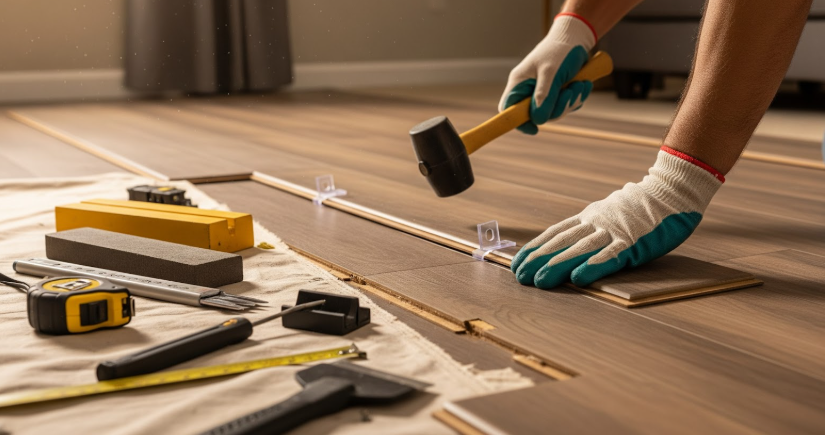
For small gaps, use a tapping block and mallet to gently shift surrounding boards back into place. If the gap is persistent or widespread, remove the affected planks, clean any debris and reinstall them with even pressure. Ensuring the planks lock tightly helps restore a smooth, gap-free surface.
How to Prevent It Next Time
Acclimate laminate in the room for at least 48–72 hours and follow a consistent installation pattern. Keeping indoor temperature stable supports better long-term performance.
Buckling or Lifting Boards
Boards that lift or buckle indicate pressure beneath or between planks. This can make floors uneven or create tripping edges.
Why It Happens
No expansion gap was left along the walls
A heavy object is preventing natural movement
Moisture entered the planks or subfloor
The perimeter trim is installed too tightly
How to Fix It
Start by checking the edges. Trim or readjust any moulding pressing against the floor. If heavy items are limiting expansion, reposition them. For moisture-related lifting, remove the raised planks, allow them to dry and inspect the subfloor for leaks before reinstalling.
How to Prevent It Next Time
Leave proper expansion space around every wall. Never glue laminate to the subfloor — floating floors need room to move naturally.
Creaking or Noisy Floors
Laminate should feel stable and comfortable. Noise usually indicates movement between the boards and the subfloor.
Why It Happens
Underlayment issues
An uneven subfloor
Planks installed over debris or dust
Boards not locked into place fully
How to Fix It
For small areas, lift the affected boards and add shims or underlayment padding to reduce movement. If the subfloor is uneven, leveling compound may be needed. In some cases, re-locking loose planks eliminates the noise entirely.
How to Prevent It Next Time
Clean the subfloor thoroughly and use high-quality underlayment designed for laminate. A smooth, clean surface reduces friction and prevents squeaks.
Uneven or Sloping Planks
Uneven planks make floors feel unstable and can cause edges to chip or lift over time.
Why It Happens
The subfloor is not level
Planks were forced together instead of locked naturally
Debris is stuck beneath the planks
Inconsistent tapping forced misalignment
How to Fix It
Remove the uneven section, inspect the subfloor and apply a self-leveling compound if necessary. Reinstall the planks with proper alignment and light, even pressure to ensure each piece locks evenly.
How to Prevent It Next Time
Check the subfloor with a long level before starting. Even minor dips or high spots can lead to long-term issues.
Peaking at the Joints
Peaking happens when the edges of two boards push upward, creating a ridge along the seam.
Why It Happens
Expansion pressure caused by trapped flooring
Boards were installed too tightly
No expansion gaps along the perimeter
Room humidity swings caused expansion
How to Fix It
Release the pressure by removing or loosening the moulding around the room. If heavy items are restricting movement, reposition them. Once pressure is relieved, the boards typically settle back into place.
How to Prevent It Next Time
Allow a full expansion gap around all walls and fixed structures. Avoid nailing moulding too tightly against the floor.
Moisture Damage in Palmdale Installations
Although Palmdale is dry, moisture problems still occur — especially in kitchens, bathrooms and laundry rooms.
Why It Happens
Standing water from spills or leaks
Laminate installed in high-moisture areas
Subfloor moisture migrating through concrete
Incorrect underlayment barriers
How to Fix It
Identify and fix the source of moisture first. Replace any swollen or softened planks. For concrete slabs, consider installing a moisture barrier before reinstalling the laminate.
How to Prevent It Next Time
Keep laminate out of areas where moisture is common, or choose moisture-resistant variations. For humid rooms, homeowners can explore alternatives like vinyl or tile for better performance.
Edges Chipping or Cracking
Once laminate edges chip, they can snag socks, collect debris or spread into wider damage.
Why It Happens
Low-quality tools used for cutting
Planks tapped too aggressively
Heavy impacts during installation
Subfloor debris pushing up under the seams
How to Fix It
Small chips can be repaired with colour-matched filler. Larger damage may require plank replacement. Always check the subfloor for debris before reinstalling.
How to Prevent It Next Time
Use a sharp blade or high-quality saw for clean cuts. Apply firm but controlled tapping. Keep the work area clean and dust-free.
Laminate Boards That Won’t Lock Together
Sometimes boards refuse to snap into place, making installation frustrating.
Why It Happens
The angle of installation is incorrect
Edge debris is blocking the lock
The plank is slightly damaged
The previous rows aren’t fully aligned
How to Fix It
Inspect the tongue-and-groove for imperfections. Clean or lightly sand the edges if needed. Realign the previous rows, then try locking again at the recommended angle. Replace damaged planks if the locking mechanism is compromised.
How to Prevent It Next Time
Follow the manufacturer's installation angle and instructions closely. Keep all edges clean and handle planks carefully.
When to Call a Professional in Palmdale
DIY installation can be rewarding, but sometimes floors need expert care. Professional installers ensure flooring remains level, secure and visually perfect. Many Palmdale homeowners choose expert help when issues return repeatedly or when repairs involve structural adjustments.
If you’re comparing options or planning a new installation, you can explore local products through laminate flooring and learn what styles fit both your space and lifestyle.
Fixing Laminate Floors the Right Way
When installed properly, laminate flooring is a long-lasting, stylish upgrade that holds up beautifully in Palmdale homes. Fixing common mistakes restores comfort, appearance and stability, helping you enjoy your floor the way it was meant to be.
If you’re unsure where to start or want guidance from local flooring specialists, don’t hesitate to we are here to help.


