

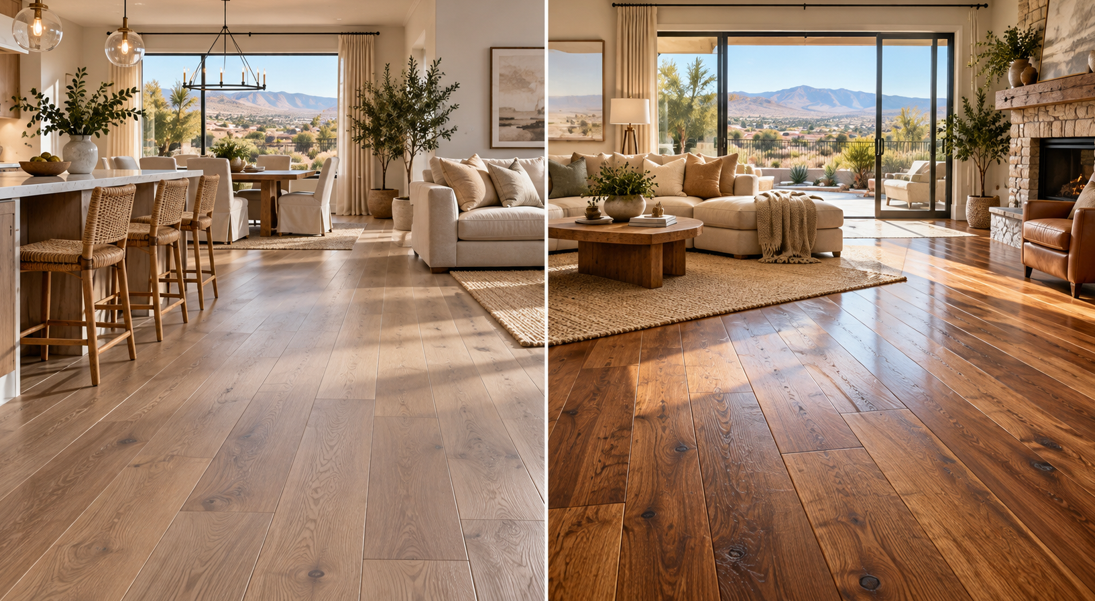
Hardwood floors bring warmth, character, and lasting value to any home. In Quartz Hill, where many homeowners love the idea of real wood underfoot, one question comes up often: is solid hardwood or engineered hardwood the better choice? Both are real wood, and both can look stunning. The right answer depends on your home, your subfloor, and how the high desert climate affects your floors.
At Metro Floors, we have installed domestic and exotic hardwoods across the Antelope Valley for more than 40 years. This guide explains the differences in plain terms so you can choose with confidence.
What Is Solid Hardwood?
Solid hardwood planks are milled from a single piece of wood, usually about three-quarters of an inch thick. Popular species include oak, maple, hickory, and walnut.
The biggest advantage of solid hardwood is its lifespan. Because the entire board is wood, it can be sanded and refinished many times. With good care, a solid hardwood floor can last for generations.
What Is Engineered Hardwood?
Engineered hardwood has a top layer of real hardwood, called the wear layer, bonded to a core of plywood or high-density fiberboard. The layers run in a cross-grain pattern, which gives the plank extra stability.
From the surface, engineered hardwood looks just like solid wood. You see the same natural grain and color. The difference is in how the plank is built beneath the surface.
How Each Handles the High Desert Climate
This is the most important factor for Quartz Hill homeowners.
The Antelope Valley has very dry air for much of the year, along with hot summer days and cold winter nights. Wood naturally expands when it absorbs moisture and shrinks as it dries. In a dry climate, solid hardwood can develop small gaps between boards, especially in winter when heating systems dry the air even further.
Engineered hardwood resists this movement much better. Its layered construction keeps it more stable through temperature and humidity changes, making it a popular choice for desert homes.
Whichever type you choose, a humidifier that keeps indoor humidity between 35 and 55 percent helps your floors perform their best.
Where Each Type Works Best
Over Concrete Slabs
Many Quartz Hill homes are built on concrete slabs. Engineered hardwood can be glued down or floated over concrete, making it the natural choice for slab foundations. Solid hardwood usually needs a wood subfloor to be nailed down, which limits where it can go.
Main Living Areas
Both types look beautiful in living rooms, dining rooms, and bedrooms. If your home has a wood subfloor and you love the idea of refinishing many times over the years, solid hardwood is a strong choice.
Kitchens
Kitchens see spills and temperature shifts from cooking. Engineered hardwood's stability gives it an advantage, though both can work with good habits like wiping spills quickly and using mats near the sink.
Rooms With Radiant Heat
Many engineered hardwood products are compatible with radiant floor heating. Solid hardwood is generally not recommended over radiant systems.
Durability and Refinishing
Solid hardwood can typically be refinished five or more times. Engineered hardwood can also be refinished, but how often depends on its wear layer. A thick wear layer of 3 to 6 millimeters allows one or more full refinishes, while thinner layers may only allow light screening.
Day-to-day surface durability is similar for both because the top layer is real wood either way. Hardness depends more on species and finish. Hickory and white oak are excellent choices for busy households with kids and pets.
Domestic and Exotic Species
Hardwood offers a wide range of species, each with its own look and hardness.
Oak: A classic, versatile favorite with visible grain
Hickory: Very hard with dramatic color variation
Maple: Smooth, light, and clean-looking
Walnut: Rich, dark, and elegant
Exotic species: Brazilian cherry, teak, and acacia offer bold color and exceptional hardness
Both solid and engineered formats come in many of these species, so you do not have to compromise on style.
Hardwood Design Trends for 2026
Quartz Hill homeowners are embracing:
Warm natural tones like honey, wheat, and light brown
Wide planks that make rooms feel open
White oak for its clean, versatile look
Matte finishes that hide dust and everyday wear
Herringbone patterns for a custom, high-end touch
Engineered hardwood often makes wide planks more practical in a dry climate, since wide solid boards are more likely to show gaps.
Cost Considerations
Pricing depends on species, grade, plank width, and finish. Quality engineered and solid hardwood often fall in a similar range. Engineered options can sometimes save on installation, especially over concrete slabs where floating or glue-down methods are used.
Either way, hardwood is a long-term investment that adds value and appeal when it is time to sell.
Which One Is Right for You?
Choose solid hardwood if you have a wood subfloor and want the longest possible lifespan with multiple refinishes.
Choose engineered hardwood if your home sits on a concrete slab, uses radiant heat, or you want extra stability in the dry high desert air.
Browse our hardwood flooring collection to compare species, colors, and finishes, or visit our Lancaster showroom to see samples in person.
Caring for Your Hardwood Floors
Sweep or vacuum often to remove desert dust.
Use a hardwood-safe cleaner and avoid excess water.
Place mats at entryways and felt pads under furniture.
Close blinds during the brightest hours to reduce fading.
Keep indoor humidity steady throughout the year.
Enjoy Real Wood That Lasts
Solid and engineered hardwood both bring timeless beauty to Quartz Hill homes. Solid wood shines for longevity, while engineered wood excels in stability and versatility. For many local homes, the best choice comes down to your subfloor and our dry desert climate.
Our bonded and insured installers offer free estimates and guaranteed labor. Reach out to us today, and let's find the perfect hardwood floor for your home.


