

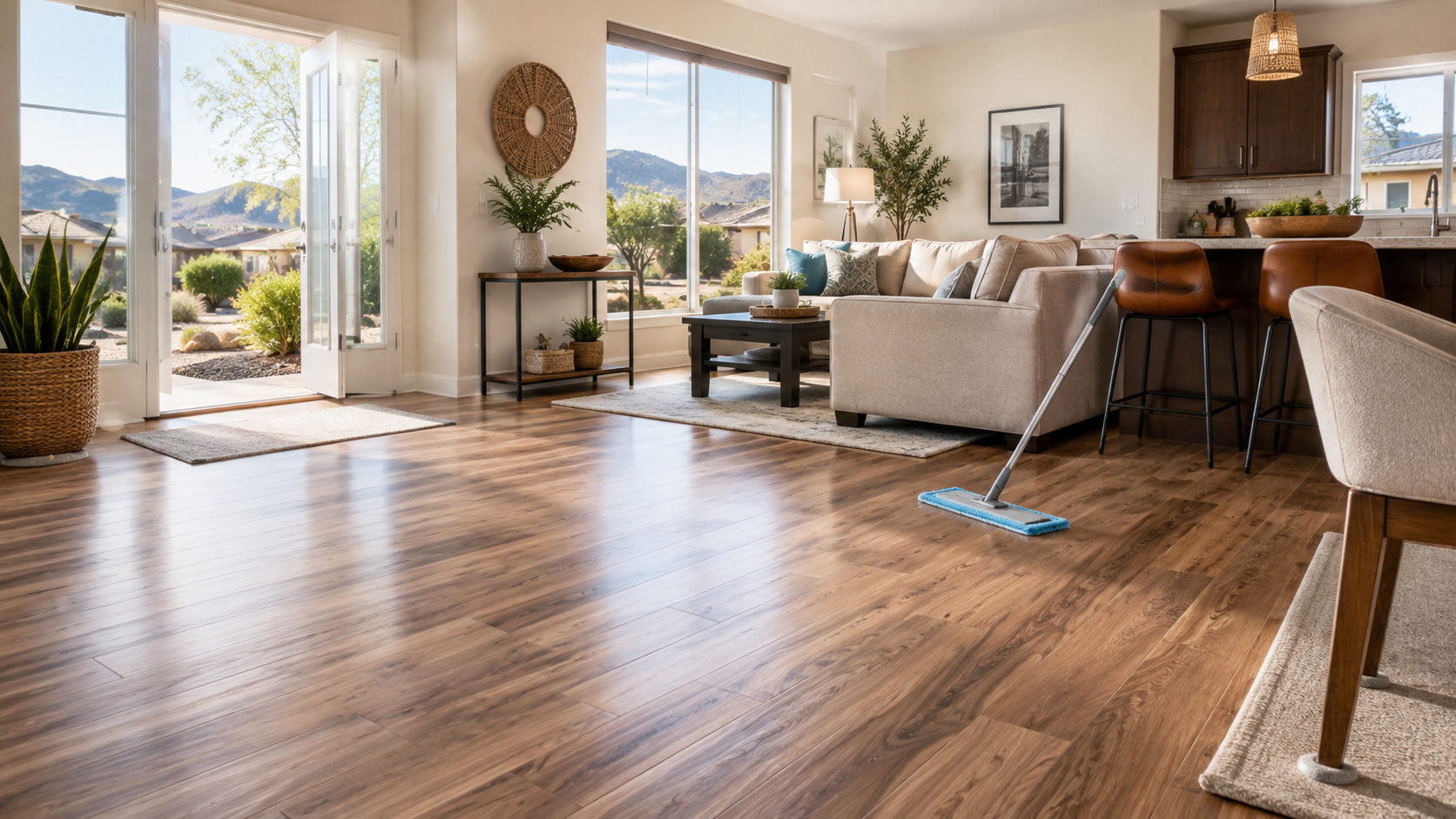
Laminate flooring can give a home the warmth and character of wood while offering practical performance for everyday life. Like any floor, though, it looks its best when regular care prevents small issues from turning into visible wear.
For homeowners in Quartz Hill, everyday dust, tracked-in grit, busy family routines, pets, furniture movement, and plenty of sunlight can all affect how flooring looks over time. Fortunately, keeping laminate in great condition doesn’t require an elaborate maintenance routine. A few consistent habits can go a long way.
At Metro Floors Inc., homeowners throughout the Antelope Valley can explore flooring options and get knowledgeable guidance for residential and commercial projects. Whether your laminate was recently installed or has already seen years of daily use, thoughtful care can help preserve its beauty and lasting value.
Here’s how to protect your laminate floors and keep them looking polished for as long as possible.
Keep Dust, Sand, and Grit Under Control
One of the simplest ways to care for laminate flooring is also one of the most important: keep loose debris from building up on the surface.
Laminate may look perfectly clean from across the room while still collecting fine particles of sand, dust, and dirt. When people repeatedly walk over those particles, they can create friction against the protective surface layer.
Sweep or Vacuum Regularly
A soft-bristle broom, microfiber dust mop, or hard-floor-friendly vacuum can help remove loose debris before it gets ground into the floor.
How often you clean depends on the household. A quiet guest room may need much less attention than a kitchen, hallway, or entryway.
Homes with children or pets may also benefit from more frequent cleaning in busy areas.
When vacuuming, use a setting designed for hard floors whenever possible. Avoid aggressive brush attachments that could unnecessarily scrape against the laminate surface.
Pay Extra Attention to Entryways
Entry doors are natural collection points for outdoor debris.
Quality doormats can capture dust and grit before they travel through the rest of the house. If your household is comfortable with it, removing outdoor shoes near the entrance can reduce the amount of abrasive material carried onto the flooring.
This can be particularly helpful in Quartz Hill, where dry outdoor conditions can make dust and fine debris part of everyday home maintenance.
Don’t Forget Pet Traffic
Dogs and other pets can bring particles inside on their paws, especially after time outdoors. Keeping the areas around frequently used doors clean can reduce how much debris gets distributed across the house.
You don’t need to chase every speck of dust. The goal is simply to prevent grit from sitting on the flooring long enough to be repeatedly walked across.
Clean Laminate With a Light Touch
Laminate flooring usually responds best to regular, gentle cleaning rather than aggressive scrubbing or large amounts of cleaning solution.
Before using a new cleaner or method, check the care instructions provided by the flooring manufacturer. Laminate products vary, and product-specific guidance is the best reference for maintaining the finish and complying with warranty requirements.
Remove Dry Debris First
Before mopping or using a cleaning solution, remove loose dirt with a broom, microfiber mop, or vacuum.
If grit remains on the surface, moving a wet mop over it can spread the particles around rather than removing them.
Use Laminate-Compatible Cleaning Products
A flooring cleaner intended for laminate can help remove everyday marks and residue without introducing unnecessary moisture.
Use only as much product as needed. More cleaning solution doesn’t automatically mean a cleaner floor, and excess product can sometimes leave streaks or a dull-looking residue.
A microfiber mop is often a practical choice because it cleans effectively without requiring the floor to become saturated.
If you’re planning another room or comparing updated flooring options, quality laminate flooring comes in a wide range of looks and performance features suited to different household needs.
Avoid Excessive Water
Laminate isn’t a surface that benefits from being flooded with water during cleaning.
Rather than using a soaking-wet mop, keep moisture controlled and allow the surface to dry promptly. Pay particular attention around plank edges and joints.
Skip Abrasive Scrubbing
Rough pads and abrasive cleaning tools can affect the appearance of the protective surface.
For a stubborn spot, start with the cleaning method recommended by the manufacturer instead of immediately reaching for an aggressive scrubber or strong household chemical.
Gentle, consistent care is typically more useful than occasional heavy cleaning.
Deal With Spills Promptly
Spills are part of everyday life. A tipped-over drink, a pet bowl splash, wet shoes, or water around the kitchen sink doesn’t automatically mean your laminate floor is in trouble.
The key is how quickly the moisture is addressed.
Wipe Up Liquid Rather Than Letting It Sit
Use a soft, absorbent cloth or towel to blot spills when you notice them.
Pay close attention to areas where liquid could settle around plank edges or seams. Different laminate products offer different levels of water resistance, so it’s useful to understand the specifications of the flooring installed in your home.
If you aren’t sure what type of laminate you have, avoid assuming that it can tolerate prolonged standing water.
Watch Repeat Problem Areas
Some parts of a home naturally experience more moisture than others, including:
Around kitchen sinks
Near dishwashers
Beside refrigerators with water connections
Around pet food and water stations
Near exterior doors during wet weather
Beneath indoor plants
A flooring-compatible mat can provide extra protection in appropriate areas, particularly where occasional splashing is likely.
Make sure mats and pads can dry properly and don’t trap moisture underneath.
Look for the Source of Recurring Moisture
If water repeatedly appears in the same location, wiping the floor only addresses the immediate symptom.
Check for a dripping appliance connection, plumbing leak, poorly sealed exterior opening, overflowing pet dish, or another recurring source.
Addressing the cause protects both the flooring and the surrounding parts of the home.
Protect the Floor From Furniture and Everyday Movement
Daily furniture use can gradually affect a floor, particularly when the same chairs, tables, and other items move across identical spots day after day.
A little protection at these contact points can make a noticeable difference.
Use Protective Pads Under Furniture
Felt or manufacturer-approved floor protectors can reduce direct friction between furniture legs and laminate flooring.
They’re particularly useful beneath:
Dining chairs
Counter stools
Side tables
Desks
Lightweight furniture that gets moved often
Check the pads occasionally. They can wear down or collect grit over time, which reduces their ability to protect the surface.
Lift Heavy Items Instead of Dragging Them
When rearranging a room, dragging heavy furniture directly across laminate can create unnecessary surface damage.
Where practical, lift the item or use an appropriate furniture-moving method that protects the flooring.
Appliances and exceptionally heavy furniture deserve extra care because their weight increases the pressure applied to the floor.
Think About Rolling Office Chairs
Home offices create a different type of wear. A chair may roll across the same small area hundreds of times during a typical working week.
A hard-floor-compatible chair mat or another approved protective surface can help limit concentrated wear.
Keep Pet Nails Maintained
Regular nail care is good for pets and can also reduce unnecessary contact between sharp nails and flooring.
A playful pet running through the home is part of normal life. The goal isn’t to treat the floor like a museum piece. Basic preventative care simply helps the surface stay attractive while the household continues to enjoy the space.
Give High-Traffic Areas Extra Attention
Not every part of a home experiences the same level of use.
Hallways, entryways, kitchens, living room pathways, and routes between commonly used rooms can receive far more foot traffic than corners or occasional-use spaces.
Identify Your Household’s Main Traffic Paths
Take a quick look at how people actually move through your home.
Is everyone crossing the same hallway to reach the bedrooms? Does the path from the back door to the kitchen get constant traffic? Does one section of the living room connect several other areas?
These are the places where preventative care can provide the greatest value.
Use Rugs and Runners Strategically
A rug or runner can protect a high-use section while adding comfort and style.
Choose products suitable for use over laminate. The backing or rug pad matters because certain materials may not be appropriate for every type of flooring finish.
Rugs work especially well in:
Entry areas
Long hallways
Living room walkways
Areas near frequently used exterior doors
They don’t need to hide your floor. A well-chosen rug can complement wood-look laminate while protecting the section that receives the most traffic.
Rotate Rugs and Lightweight Furniture Occasionally
Leaving every item in exactly the same position for years can create uneven patterns of wear or sunlight exposure.
Periodically adjusting movable rugs or smaller furniture can help distribute everyday use more evenly.
Small changes are usually enough. There’s no need to constantly rearrange the room.
Be Mindful of Quartz Hill Sunlight
Natural light can make laminate flooring look beautiful, especially when it highlights the grain and color of wood-look designs.
However, rooms that receive strong direct sunlight for extended periods deserve a little extra attention.
Use Window Coverings When Needed
Blinds, shades, or curtains can help manage intense direct sunlight during the brightest parts of the day.
You don’t need to keep the room dark. The idea is to reduce prolonged exposure in areas that receive strong sunlight day after day.
Homeowners who are already considering window improvements can also explore UV-filtering options appropriate for their windows and household preferences.
Watch for Uneven Exposure
Furniture and rugs can create areas that receive different amounts of sunlight.
Moving smaller items occasionally may help create more even exposure across the room.
If you notice a difference in flooring appearance after moving a rug or piece of furniture, check the care information for your particular flooring before trying any corrective product.
Maintain a Reasonably Stable Indoor Environment
Many laminate flooring products contain wood-based materials, so indoor environmental conditions can matter.
Rather than relying on one universal humidity or temperature recommendation, follow the specifications provided by the flooring manufacturer.
Normal use of heating and air conditioning can help maintain a comfortable indoor environment. If your flooring documentation includes recommended conditions, keeping the home within those ranges can support long-term performance.
Know Which Cleaning Habits Can Shorten a Floor’s Good Looks
Good maintenance isn’t only about what you do. It’s also about knowing when a cleaning method may create more wear than benefit.
Don’t Assume Stronger Cleaner Is Better
A powerful multipurpose cleaner may work beautifully on one household surface and be a poor match for another.
Laminate has a finished wear surface, so choose products specifically approved for the flooring rather than experimenting with harsh chemicals.
Be Careful With Wax and Polish
Laminate generally doesn’t need the same waxing routine associated with some other flooring materials.
Applying a product that isn’t designed for the floor can leave residue, create an uneven appearance, or make future cleaning less effective.
Always check the manufacturer’s instructions before applying polish, wax, oil, or a restoration coating.
Avoid Steam Unless Your Flooring Manufacturer Approves It
Steam introduces both heat and moisture.
Because laminate products differ, homeowners can’t assume that a steam cleaner is suitable simply because it’s marketed for hard flooring. Check the manufacturer’s care instructions first.
Don’t Let Small Messes Build Up
Waiting until the floor looks noticeably dirty can mean more intensive cleaning later.
Routine dust removal and prompt spot cleaning usually make maintenance easier. They also reduce the need to scrub heavily at dirt that has been sitting on the surface for an extended period.
A simple routine performed consistently is often the best approach.
Catch Changes Early
Laminate flooring can experience normal wear over time, but certain changes deserve a closer look.
Noticing them early gives you more options for understanding what’s happening before the affected area becomes larger.
Keep an Eye Out for Changes Such As:
Planks that appear to be separating
Edges that look raised or swollen
A section that feels different underfoot
New movement when walking across the floor
Persistent or unusual noises
Deep scratches or chips
Changes around an area that has experienced moisture
One symptom doesn’t automatically identify the cause.
For example, movement might relate to the flooring, the installation, or conditions underneath it. Raised edges can have several possible causes as well.
Be Careful With One-Size-Fits-All DIY Repairs
Online flooring repair advice can be useful for understanding a problem, but not every repair technique suits every laminate product or installation system.
Before attempting a significant fix, it helps to know:
Which laminate product is installed
How the floor was installed
Whether warranty coverage may still apply
Whether moisture is involved
Whether the issue extends beyond one plank
Using the wrong repair method can sometimes make a cosmetic problem more noticeable.
Know When Expert Input Makes Sense
A small surface mark may only need straightforward care. Multiple lifting planks, recurring moisture, significant movement, or unexplained changes can be worth discussing with a flooring professional.
Professional guidance can help determine whether the issue relates to routine wear, maintenance, installation, moisture, or another condition.
That gives you better information before deciding what to do next.
Make Laminate Care Part of Your Normal Home Routine
Keeping laminate flooring attractive doesn’t require treating it delicately every day. Floors are there to be lived on.
The most effective approach is to make a few protective habits part of your regular household routine.
Keep loose grit under control before it gets walked across repeatedly. Use cleaners and tools appropriate for laminate. Wipe up spills instead of letting moisture remain around plank joints. Protect furniture contact points and high-traffic paths. Manage prolonged direct sunlight when practical, and pay attention when an area of flooring suddenly looks or feels different.
These habits aren’t complicated, but consistency matters.
It’s also worth remembering that care requirements can vary between laminate products. When in doubt, the manufacturer’s maintenance information is the most reliable guide for the specific flooring installed in your home.
For Quartz Hill homeowners considering a flooring update, long-term satisfaction starts before the floor is installed. Choosing a quality product suited to the room, household traffic, lifestyle, and design goals makes ongoing care much more straightforward.
Metro Floors Inc. has served Antelope Valley customers for decades, helping residential and commercial clients find beautiful, durable flooring that works for their spaces. Experienced guidance can also help homeowners understand the differences between products rather than choosing based on appearance alone.
If you’re planning new floors or have questions about choosing laminate for your Quartz Hill home, get in touch with the knowledgeable team at Metro Floors Inc. for personalized guidance.


